Our beach towns experience large surges in traffic due to out-of-town visitors, in San Clemente they arrive by car and train from origins far away as Fresno. When convenience is king a rideshare may fill the intervals between bus rides on a fixed schedule.
Click for Lyft Details
Lyft rideshare has done just that. In a historic move Lyft has partnered with the City of San Clemente to replace the fixed ride service previously offered by OCTA routes 191 and 193. In a new program Lyft is the City's rideshare parther offering convenience and efficiency for residents and visitors providing trips around the city on demand, quickly and affordably for carfree visitors and residents alike. Is Laguna next?
To get started download the Lyft App and enter SCRIDES in the "Payment" section. To be eligible, rides must be taken between 6 AM-6 PM, boardings are along corridors of the 191 and 193 bus
routes. To make sure you’re at the right space, look for signs at
participating bus stops.
How do you like
Laguna's traffic congestion so far? Get ready for more because
Tuesday night the Laguna Beach City Council voted 5-0 to guarantee increasing more
car traffic in Laguna Beach. Agenda Item #16 Task Order for a
Traffic Analysis Model says in brief:
“Our City is near
build-out, there are several large re-development projects
that propose use intensification within the City that may
increase local traffic congestion.”
Our LB Public Works
department is preparing for traffic congestion caused by these
re-development projects – some of them scheduled for
construction simultaneously. LB Public Works relies on a
consultant to embellish a computer traffic model of Laguna’s
main road corridors through downtown. The consultant's
traffic model is car-centric, they measure transportation
success by moving more cars faster so get ready for more
traffic erosion through Laguna Beach.
Reading the consultant's traffic modeling manual shows how car
intensification occurs:
“saturation
flow rates,” “pedestrian interference,” “Intersection Capacity
Utilization (ICU),” “Level of (car) Service (LOS),” “Conforms
to Highway Capacity Manual (HCM).
The keywords
"transit, bus, trolley, rail, lightrail, and cyclists" don't
appear in the consultant's manual. "Pedestrians" are considered
interference to car traffic; a delay in signal timing. Two arterial highways
already slice through Laguna Beach, does Laguna want more of the
same?
Once again our Council neglects the core problems: how to move
those 6 million visitors and provide alternatives to cars. Once
again Public Works overlooked the Laguna Beach mobility plan
itself: the Circulation Element of the General Plan. Now is the
time for the City and Developers to change traffic models
otherwise Laguna Beach is modeling Carmageddon.
"If
you do not know where you are going it does not matter which way you go"
Lewis Carol
After more than a year of community planning, isolated community members respond to bike infrastructure like this:
“If the city wants to continue
to put bike path in our area you should get us involved,” said Bud
McCoy, who like many of his neighbors, hadn’t heard of the bike path
until construction workers were cordoning off Fjord Drive in preparation
for road work. “We feel that you just ramrodded that down our throats.”
"The
master plan was developed by the Santa Barbara County Association of
Governments over more than a year of planning, including four meetings
of the Technical Advisory Committee, meetings with schools, public
health and business representatives, surveys, interviews, and a series
of public workshops held in October 2018 and March 2019."
Thankfully the Solvang Council saw through the residents uninformed protest. After staff reporting, public comment and brief
council deliberation, the city council voted 4-1 to adopt the Solvang
portion of the Santa Ynez Valley Bicycle Master Plan.
Laguna Canyon Road SR-133 and South Coast Highway Hwy-1 are under Caltrans jurisdiction. Senate Bill 127 pushes CalTRANS to build Complete Streets for SR-133 and Hwy-1 - the TRANSPORTATION part of CalTRANS.
Tell Governor Newsom to please sign this legislation, three step request here.
Caltrans claims to make streets safer when they make roadway improvements, like the $39 million Caltrans improvement planned for Laguna Canyon Road beginning 2021.
Caltrans often claims to make streets safer when they repair them, but in practice they prioritize fast traffic over more livable streets. The Complete Streets for
Active Living Bill will provide Caltrans stronger direction, and force the safety
improvements necessary to reverse the poor safety record on SR-133.
246 Collisions 5-Killed 311 Injured, 2015-2018
"In California from 2007-2013, nearly 1.7 million people were injured
in traffic incidents, including 95,758 while walking along or across the
street. In those crashes, 22,117 people were killed, with pedestrians
accounting for one-fifth of the total persons killed." The problem is
often concentrated around Caltrans roads that go through low-income
neighborhoods where more people get around via transit, biking, and
walking."
SB 127 Co-Sponsors: California Bicycle Coalition, California Walks, American Heart Association, AARP, Safe Routes Partnership Bill Supporting Organizations: 350 Bay Area Action, 350 Silicon Valley, Active San Gabriel Valley,
American Lung Association in California , Alameda County Transportation
Commission , Berkeley Climate Hub, Bike Bakersfield, Bike Concord, Bike
East Bay, Bike Monterey, Bike San Diego, California Alliance for Retired
Americans, California City Transportation Initiative/NACTO, California
Democratic Party, California Interfaith Power & Light, California
Park and Recreation Society, California ReLeaf, CALSTART Inc., CALPIRG,
Catholic Charities of the Diocese of Stockton, Cedars, Center for
Climate Change and Health, Central California Asthma Collaborative, City
of Encinitas, City of Half Moon Bay, City of Long Beach, City of
Sacramento, City and County of San Francisco, City of Santa Monica, City
of San Luis Obispo, Climate Action Campaign, ClimatePlan, Climate
Resolve, Coalition for Clean Air, Coalition for Responsible
Transportation Priorities, Compton Unified School District, Cultiva La
Salud, Davis Bike Club, Day One, East Bay Recreational Park District,
Elders Climate Action (NorCal), Environment California, Fossil Free
California, Inland Empire Biking Alliance, Latino Coalition for a
Healthy California, La Verne Bicycle Coalition, Leadership Counsel for
Justice and Accountability, Local Government Commission, Los Angeles
County Bicycle Coalition, Los Angeles Walks, Lyft Inc., Midpeninsula
Regional Open Space District, Napa County Bicycle Coalition, Natural
Resources Defense Council, Natural Resources Services Division Redwood,
Office of the Mayor, San Francisco, Orange County Bicycle Coalition,
Office of the Mayor, San Francisco, Pasadena Complete Streets Coalition,
Planning and Conservation League, PeopleforBikes, PolicyLink, Public
Advocates, Redwood Community Action Agency, Rails-to-Trails Conservancy,
Rural Counties Representative of California, San Diego County Bicycle
Coalition, San Francisco Bicycle Coalition, San Francisco Transportation
Municipal Agency, San Francisco Department of Public Health, San
Francisco Planning Department, SFBA Families for Safe Streets, Santa
Monica Spoke, Save The Bay, Seamless Bay Area, Shasta Living Streets,
Sierra Club California, Silicon Valley Bicycle Coalition, Silicon Valley
Leadership Group, Sonoma County Bicycle Coalition, Sunflower Alliance,
Transform, Transportation Agency for Monterey County, Trust for Public
Land, Walk Bike Berkeley, Walk & Bike Mendocino, Walk Sacramento,
Walk San Francisco, and Walk Long Beach.
Cinque Terre Italy located on the Italian Mediterranean has a population of roughly 6000 residents manage up to 5 million visitors per year with NO PARKING. Maybe we should ask the Italians how to do that.
Walking paths, trains and boats connect the five villages, cars cannot reach any village from remote inland cities.
Genoa and Livorno. Day-trippers from cruise ships that stop there stream
into the villages of Riomaggiore, Manarola, Corniglia, Vernazza, and
Monterosso. Auto drivers park at La Spezia and take a train to reach the five villages.
A walking trail, known as Sentiero Azzurro ("Azure Trail"), connects the villages. The section from Riomaggiore to Manarola called the Via dell'Amore
("Love Walk") is temporarily closed but alternative trails remain open.
Here is a Google Map of Cinque Terre, below a comparison of the five villages to Laguna Beach. The HD videos take you on a walking tour so use full-screen!
The table shows visitors pay for access to Cinque Terre, there is a fee for using the trains, the walking path even for using the beach. Cinque Terre shows us how to manage local tourism with public transportation and pay for it.
Here is a quick summary of mobility keywords found in the DRAFT 2019 LB Downtown Specific Plan (DSP 169 pages):
Bicycle:
5
Bike:
1
Bus:
4
Complete
Streets Policy: 0
Downtown
housing: 4
Enhanced
Mobility and Complete Streets Transition Plan: 0
Increasing
density:0
Lightrail:
0
Market-rate:0
Multi-story:1
Park:
49
Parking
requirements: 12
Parking
structure: 13
Pedestrians:
28
Rail:
0
Relaxed parking: 0
Scooter: 1
Shuttle:
4
Single
formula: 0
Skateboard:
1
Transit
Center: 6
Transit:
26
Trolley:
17
Walking:
3
Parking: 411
The intent of our 2019 DSP is clear. Once again our Laguna Beach Planning Commission denies solutions to Laguna's mobility crisis by preserving 1950's parking requirements (the same as Irvine's). The LBPC denies mobility planning altogether, Laguna is a parking lot after-all.
In 169 pages (80MB) of our Planning Commission's latest DRAFT Downtown Specific Plan, Complete Streets Policy is not mentioned, instead complete streets is reduced from a state transportation mandate to a paradigm. Note the mandate was specified previously in the RFP for a Downtown Parking Management Plan. Now read the strawman logic setup (DSP page 17) in this mumbo-jumbo:
Transportation changes are notable with respect to new perspectives on parking. The complete streets paradigm emphasizes designing for all modes of travel, particularly transit and pedestrians, and has resulted in a de-emphasis on requiring parking based on the assumption that every person will be driving their own car and only visiting a single establishment. In the Downtown, the increase in available trolleys and the success of demand-based pricing has changed both the behavior of and the parking availability for customers. This process is predicted to continue with the expansion of ride-sharing services and the advent of autonomous vehicles.
The claim is made that demand-based pricing and available trolleys has already changed the behavior of customers and parking availability. Further, future technological means will change roadway user behavior and parking availability, so there is no need to take actions with complete streets interventions.
PC claims with no cited data are unsubstantiated
Expanding ride-sharing services will benefit customers - unsubstantiated
Automomous vehicles will benefit customers - unsubstantiated
As if by magic a paradigm is enough to change customer behavior
As if by magic a paradigm boosts parking availability
Complete Streets Policy mandates is only a paradigm, so ignore it
The Enhanced Mobility and Complete Streets Transition Plan is not referenced
The Deliverables in the Appendix are missing.
Only a corrupt city manager, paid city lackeys and revolving-door consultants could write mumbo-jumbo shiz like this.
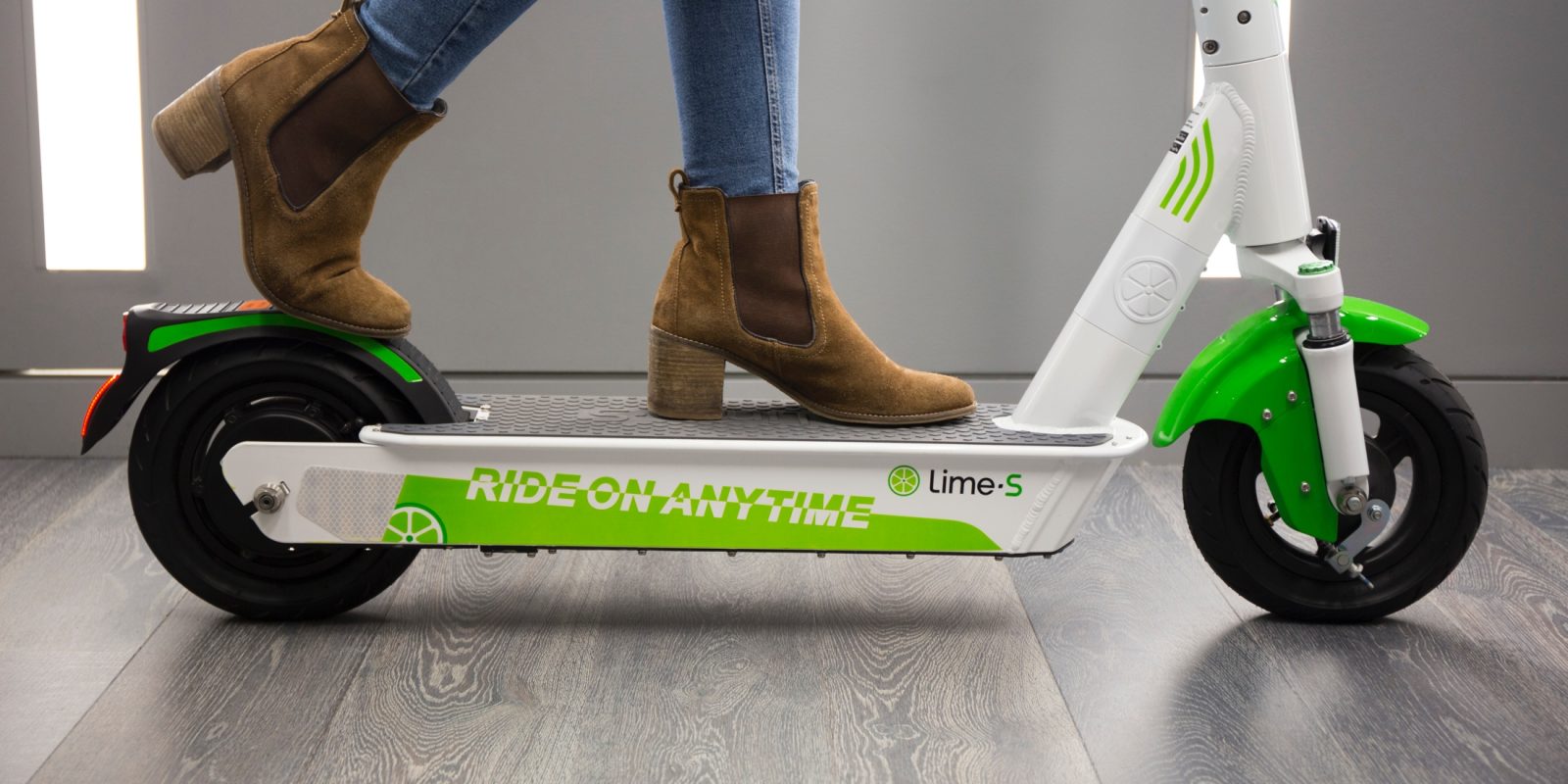
Scooters aren't good for the environment? Well it depends, while riding a scooter is better than driving a car the lifetime environmental costs are not. It depends how you crunch your numbers a study shows:
Making, deploying, transporting, Juicing them is not emission-free
Worse for environment than transport modes they replace
Calculate the emissions per mile per passenger carried over life-cycle
More emissions than bus with high
ridership, electric moped, electric bicycle
More emissions than regular bicycle, or carbon-free walk.
Germany is building bicycle freeways (Radschnellweg) exclusively for bicycle commuters. CycLAvia reports the latest one is between 10 German cities, including Duisburg, Bochum, and Hamm, and planned to remove 50,000 cars from existing roads. That would work well for Laguna Beach where Laguna Canyon Road's capacity is expected to carry 56,000 (ADT) per day by 2020. Irvine to Laguna on the Old RT-185 would work so nice!